LEARN MORE
FAITH
Thanksgiving
In Pakil, expressions of gratitude shape the devotion to Our Lady of Turumba. Many devotees return to the Virgin not to make requests, but to give thanks for prayers that have already been answered. These gestures of thanksgiving are rooted in deeply personal experiences. People share how their wishes have come true, in the form of a long-awaited child, success in board exams, reconciliation between spouses, the chance to work abroad, or even victory in elections.
Each offering and act of thanksgiving tells a personal story of a fulfilled promise and affirms a continuing faith, reminding the community that answered prayers are worth returning to and celebrating.

Protection and Health
Many devotees turn to Our Lady of Turumba for protection in moments of fear and uncertainty. Over time, similar stories of protection and miracles are woven into Pakil’s history:
-
During the Second World War, townspeople believed that Pakil was spared from bombings when pilots reportedly saw a woman dressed in white standing atop the church, motioning for peace.
-
One elder woman recalled how her husband, a soldier sent to war, became the focus of her prayers. Each day, she prayed for his safety. For two years, she even walked on her knees as an act of penance and unwavering devotion, entrusting his life entirely to the Virgin.
People also turn to the Turumba devotion for help in times of sickness and suffering. Through countless stories shared across generations, visitors come to Pakil and visit the Turumba seeking for healing, especially the elderly who pray for strength and better health. Acts of devotion such as helping carry the andas or offering flowers are done as part of their prayer request or plea for healing.
Several testimonies include recovery from stroke, children with disability began learning to walk again, and illnesses improving after praying to the Virgin. These stories continue to strengthen the community’s belief in the intercession of the Mahal na Birhen ng Turumba.
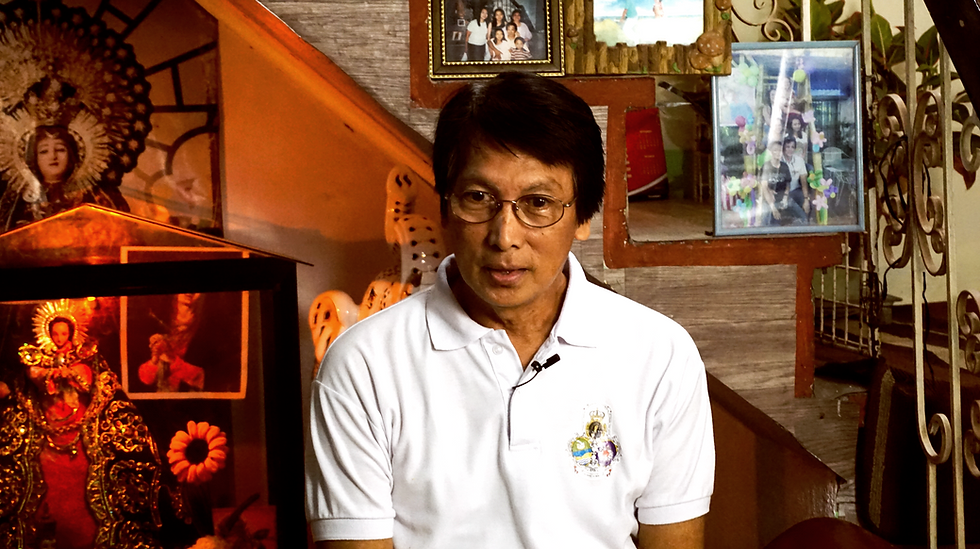
“Lagi ang dasal ko ‘yung health ngayon. Kasi may edad na kami. Tsaka kahit mother ko, mga hipag ko, pinagdadasal ko rin. Sinasama ko sa dasal yan. Lalong-lalo yung mother ko.
G. Edgardo Araza
Local Resident in Pakil, Laguna
“Lagi ang dasal ko ‘yung health ngayon. Kasi may edad na kami. Tsaka kahit mother ko, mga hipag ko, pinag-dadasal ko rin. Sinasama ko sa dasal yan. Lalong-lalo ‘yung mother ko."
G. Edgardo Araza
Local Resident in Pakil, Laguna
Prayer Requests
Many devotees pray to Our Lady of Turumba for personal intentions, especially during important moments in their lives. Some bring items that represent their prayers, such as a suitcase or a small airplane figurine for overseas job opportunities, or flowers to express gratitude for having a child.
Students and professionals commonly seek the Virgin’s help for academic and career success. Testimonies include passing the Licensure Examination for Teachers, law students completing the bar exam, and board exam results leading to careers in engineering, nursing, and other fields. Families often share images of the Virgin as a form of support and encouragement for those preparing for major examinations.
Other devotees pray for guidance and strength in their daily lives. One young person shared how he credited the Virgin’s intercession for helping him finish school despite mental and personal challenges. These accounts show how faith in the Virgin remains part of everyday goals and achievements, from education and work to family and well-being.
Akò or Panata
Stories of protection and healing are closely linked to the act of akò or panata to the Virgin. These promises represent a deeply personal relationship, where devotees seek help while offering commitment in return.
The act of akò or “panata” refers to a solemn promise, commitment, or the fulfillment of a responsibility made by devotees to Our Lady of Turumba in return for her intercession or blessings. In the Turumba devotion, this practice is known as “pag-akò,” which means taking a vow or responsibility before the Virgin. This forms the spiritual core of devotion in Pakil. When someone says “Inaakò ko,” they are expressing both a plea for assistance and a willingness to carry a burden, entrusting their fears, hopes, and struggles to the Blessed Virgin of Turumba.
After praying and asking for the Virgin’s intercession, devotees often take part in the novenas (called lupi), sacred activities, and the processions during the festival period. These acts of participation are seen as the visible fulfilment of their promise. Many believe that when they fulfill their vow, the Virgin continues to guide and protect them.

“Tulungan mo po ako. At limang Biyernes po akong lalakad ng paluhod. Pagalingin niyo po ako.”
Gng. Matilde Garcia Villarreal
Local Resident in Pakil, Laguna
“Tulungan mo po ako. At limang Biyernes po akong lalakad ng paluhod. Pagalingin niyo po ako.”
Gng. Matilde Garcia Villarreal
Local Resident in Pakil, Laguna
Some vow-makers return to the shrine each year to give thanks to the Virgin, showing that their request has been granted or to reaffirm their devotion. Others express their panata through physical acts of devotion such as walking on their knees during the lupi, helping carry the andas, or serving in church activities.
One example of testimony comes from an elder woman (pic above), who shared that after experiencing eight months of paralysis, the loss of a child, and her husband being sent to war, she turned to the Virgin and made a vow. When she recovered, she fulfilled her vow, returning to Pakil and completing her promised act of devotion.
Her story captures what “pag-akò” means in lived faith, a willingness to bear suffering and fulfill a vow as a form of trust and gratitude. Through pag-akò, faith becomes tangible: carried in the body, repeated in yearly acts, and remembered in every fulfilled promise.